
Balance Exercises for Seniors to Reduce Fall Risk
Table of Contents
Have you ever felt unsteady while getting out of a chair, turning around, or walking on an uneven surface? As you grow older, changes in muscle strength, coordination, and reaction time can make everyday movements more challenging. But does aging mean losing your balance is unavoidable? Not at all!
Balance Exercises for Seniors will help improve stability, strengthen supporting muscles, and build confidence in everyday movement. If you’re experiencing frequent unsteadiness, Balance & Gait Disorder Physiotherapy in Edmonton can provide additional support.
At In Step Physical Therapy, our physiotherapists help you work toward safer movement, better balance, and greater independence.
Why Does Balance Become More Challenging as You Age?
Your body relies on information from your eyes, inner ears, muscles, joints, and nervous system to maintain balance.
As you age, muscle weakness, reduced flexibility, changes in sensation, and certain medical conditions may affect how these systems work together.
You might notice difficulty walking in low light, standing on one leg, or changing directions.
The encouraging news? With appropriate exercises and consistent practice, many older adults can improve their stability.
Why do everyday movements feel less steady than they used to?
Staying balanced takes teamwork between your senses, muscles, and nervous system. Changes in strength, joint movement, or sensation can make that teamwork harder, especially when turning or walking on uneven ground.
What Are the 9 Best Balance Exercises for Seniors?
You don’t need complicated equipment to work on your balance. Simple movements can help improve strength, coordination, and stability.
Before starting, choose a flat, non-slip surface and keep a sturdy countertop nearby. If you’ve experienced frequent falls or significant unsteadiness, consult a physiotherapist before exercising independently.
Sit-to-Stand Exercise
Sit on sturdy chair with your feet flat on the floor. Lean forward slightly, slowly stand up, and gently lower yourself back down. Use your hands for support when needed.
Benefits: Strengthens your thighs and hips, making everyday movements easier.
Heel Raises
Stand behind a sturdy countertop and hold on for support. Slowly lift your heels while keeping the toes on the floor. Lower your heels with control.
Benefits: Improves calf strength and stability during walking.
Sideways Walking
Hold a secure countertop and take small steps sideways. Keep your body upright and your movements controlled.
Benefits: Strengthens your hip muscles and improves side-to-side balance.
Tandem Standing
Stand near stable support. Place one foot slightly ahead of the other. If comfortable, gradually move toward a heel-to-toe position while maintaining support.
Benefits: Challenges balance and improves standing stability.
Supported Marching
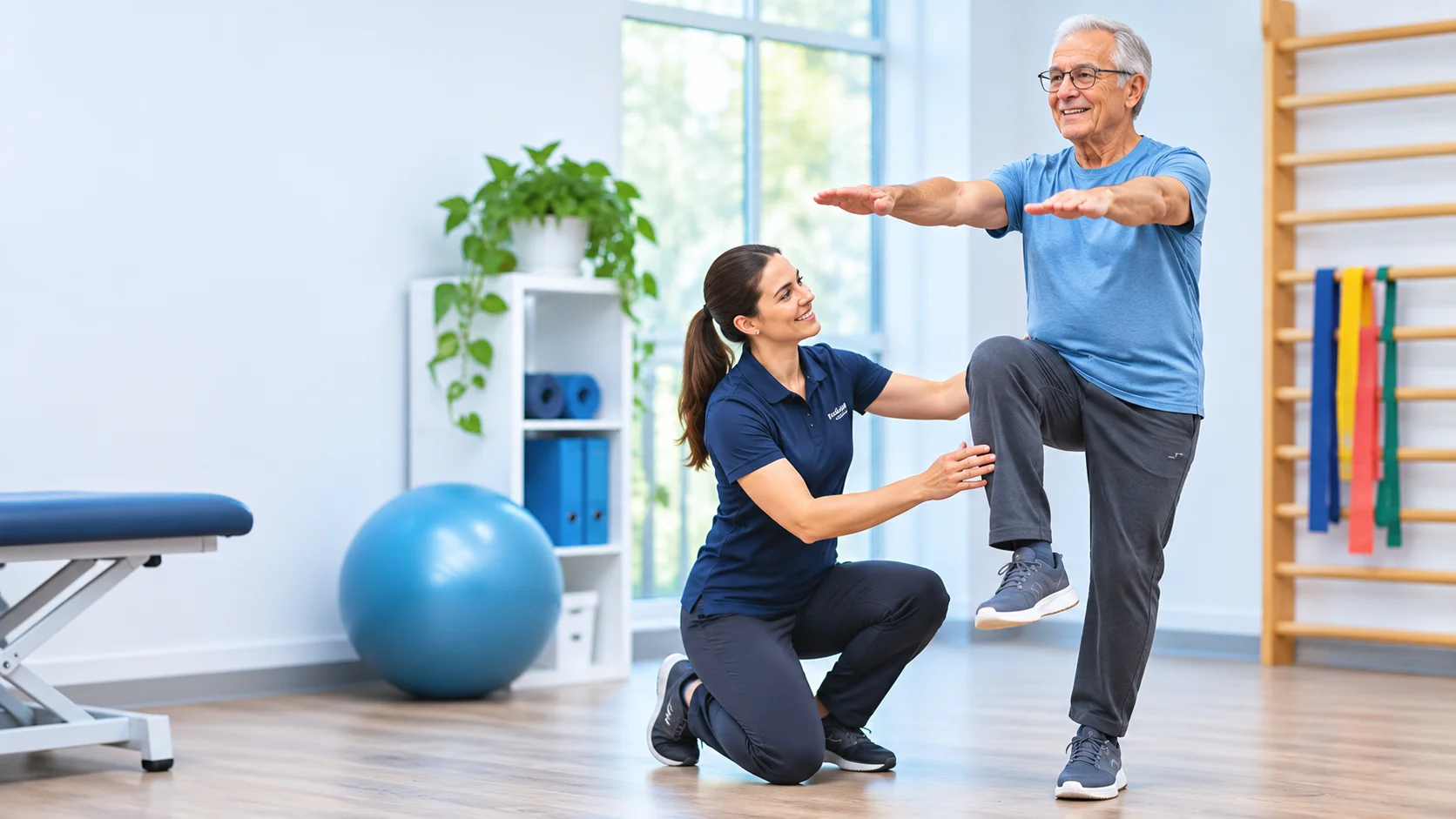
Stand beside a sturdy countertop and hold on. Slowly lift one knee, lower it, and repeat with the opposite leg.
Benefits: Improves weight shifting, coordination, and leg control.
Standing Weight Shifts
Stand with the feet shoulder-width apart while holding a countertop. Slowly shift your body weight onto one leg, then the other, keeping both feet on the floor.
Benefits: Improves weight distribution and controlled movement.
Toe Raises
Stand upright while holding stable support. Slowly lift your toes off the floor without raising your heels. Lower them gently.
Benefits: Strengthens the muscles along the front of your lower legs, supporting foot control.
Forward and Backward Stepping
Hold a sturdy countertop. Take a small step forward, return to your starting position, and then step backward. Repeat with the other leg.
Benefits: Improves stepping coordination and movement control when changing directions.
Seated Leg Extensions
Sit upright in a sturdy chair. Slowly straighten one knee, pause briefly, and lower your foot. Repeat with the opposite leg.
Benefits: Strengthens your thigh muscles to support standing and walking.
These Balance Exercises for Seniors should match your physical abilities. Stop if you experience dizziness, significant unsteadiness, or unusual pain.
Do I need to do all nine exercises in one session?
No. Start with a few movements that suit your abilities and that you can perform safely with support. Your physiotherapist can help you choose a manageable starting routine.
What Common Mistakes Can Make Balance Exercises Less Effective?
Balance exercises may look simple, but the way you perform them matters. Small mistakes can reduce their effectiveness or increase the risk of losing your footing. Understanding what to avoid can help you get more from your routine.
Rushing Through Movements
Moving too quickly can affect coordination and stability. Focus on slow, controlled movements rather than completing more repetitions.
Choosing Exercises That Are Too Difficult
Challenging your balance is important, but attempting difficult movements without suitable support can increase fall risk. Progress gradually based on your abilities.
Relying Only on Strength Exercises
Strong muscles support balance, but coordination, weight shifting, and movement control also matter. A well-rounded routine should address these different abilities.
Ignoring Signs of Fatigue
Tired muscles can affect movement quality. Take breaks when needed and avoid pushing through dizziness or significant unsteadiness.
Does letting go of support make an exercise better?
Not automatically. If letting go makes you wobble or rush, keep using support. Aim for controlled movement, and change the level of support only when it’s appropriate for your abilities.
How Often Should Seniors Practise Balance Exercises?
Consistency matters more than completing a lengthy workout occasionally.
Begin with short, manageable sessions based on your abilities. Your physiotherapist can recommend suitable repetitions, frequency, and progression.
As your stability improves, Balance Exercises for Seniors can become part of your regular physical activity routine.
Avoid increasing exercise difficulty without appropriate support if you’re at high risk of falling.
Should I make up for missed sessions with a longer workout?
There’s no need to squeeze everything into one session. Return to your usual routine and keep it manageable. Doing too much at once can leave you tired and make your movements less controlled.
How Can Physiotherapy Help Seniors Improve Their Balance?
What if you still feel unsteady despite exercising regularly?
At In Step Physical Therapy, our Balance & Gait Disorder Physiotherapy in Edmonton service focuses on identifying factors affecting your stability and providing personalized rehabilitation.
Our physiotherapists will offer:
- Fall risk assessment: Evaluating walking patterns, strength, stability, and previous falls.
- Personalized balance training: Developing exercises suited to your movement abilities.
- Gait rehabilitation: Improving walking coordination and movement control.
- Strengthening programs: Addressing weakness in your legs and supporting muscles.
- Vestibular rehabilitation: Managing suitable dizziness-related conditions affecting balance.
Our approach aims to improve balance for older adults while supporting confidence and independence.
How is a physiotherapy plan different from following an exercise video?
A physiotherapist can observe how you move, check which tasks feel difficult, and adjust exercises to suit you. Your plan can then change as your strength, control, and confidence develop.
When Should You Consider Professional Balance Training?
You don’t need to experience a serious fall before seeking physiotherapy.
Consider an assessment if you frequently stumble, rely on furniture while walking, struggle with stairs, or avoid activities because you’re worried about falling.
Although Balance Exercises for Seniors can be helpful, personalized treatment may be necessary when balance difficulties affect your daily routine.
Sudden severe balance loss, particularly with weakness or speech changes, requires emergency medical attention.
Is it worth getting help if I stumble but haven’t actually fallen?
Yes. Catching yourself on furniture or repeatedly losing your footing deserves attention. Getting help before a fall gives you a chance to address movement difficulties and discuss safer ways to stay active.
What Else Can Help Reduce Fall Risk at Home?
Your surroundings also influence your safety.
Keep walkways clear, secure loose rugs, improve lighting, and use sturdy handrails near stairs. Wear supportive footwear and avoid rushing when changing positions.
Combining these precautions with regular Balance Exercises for Seniors can support safer everyday movement.
Which areas of my home should I check first?
Start with places you use often, such as the route from your bed to the bathroom. Look for loose rugs, clutter, poor lighting, and wet floors. Clear pathways and secure handrails can make these spaces safer.
Steadier Steps Toward Greater Independence!
Growing older doesn’t mean giving up the activities you enjoy. With suitable exercises, consistent practice, and personalized physiotherapy, you can work toward improving stability and movement confidence.
At In Step Physical Therapy, our Balance & Gait Disorder Physiotherapy In Edmonton service offers individualized balance assessments, strengthening programs, and gait rehabilitation to support safer mobility.
Ready to feel more confident on your feet? Contact In Step Physical Therapy today to book your balance and gait physiotherapy assessment!
Author Bio:
Neha Anil Saraf – Registered Physiotherapist
Neha Anil Saraf is a Registered Physiotherapist at In Step Physical Therapy with over 15 years of clinical experience. She holds a Bachelor of Physiotherapy (2007) and a Master of Physiotherapy (2012), with additional training in vestibular and concussion rehabilitation. Her clinical interests include geriatric physiotherapy, balance disorders, and musculoskeletal rehabilitation. Neha focuses on helping older adults improve strength, stability, mobility, and confidence in their everyday activities.
Watch Our Videos:
Frequently Asked Questions:
- What should I bring to a Balance & Gait Disorder Physiotherapy in Edmonton appointment?
Wear comfortable clothing and bring your usual walking shoes, any walking aid you use, and a current medication list. For your appointment at In Step Physical Therapy, it can also help to note when your unsteadiness happens. - Can medications affect my balance?
Yes. Some medicines can cause sleepiness, dizziness, or slower reactions. Ask your pharmacist or prescribing clinician to review any concerns, and avoid stopping or changing medication on your own. - Is walking enough to improve balance for older adults?
Walking supports regular activity, but it may not cover every aspect of balance. A suitable routine may also include strength training and balance exercises that practise controlled changes in body position. - Should I mention a fall even if I wasn’t hurt?
Yes. Tell your healthcare provider about it, including where it happened and how you felt beforehand. Those details can inform a fall risk assessment, even when there’s no obvious injury. - Can changes in eyesight make me feel unsteady?
They can. Difficulty seeing obstacles or judging steps can affect safe movement. Keep up with eye appointments and discuss changes in your vision instead of assuming they’re simply part of getting older. - Can I work on my balance while using a cane or walker?
Yes. A walking aid doesn’t rule out balance training. Your physiotherapist can help select suitable activities and check that your aid fits properly and that you’re using it safely. - How can I manage a fear of falling?
Talk openly about which activities make you nervous. A supported activity plan can help you stay involved in everyday life. Avoiding movement altogether may reduce activity and make it harder to maintain strength. - Does bone health matter when trying to prevent fall injuries?
Yes. Balance training addresses steadiness, while bone health affects how vulnerable bones may be during a fall. Ask your healthcare provider about the bone health and whether you need a review of your calcium or vitamin D intake. - Can drinking alcohol affect steadiness?
Yes. Alcohol can affect balance and increase the chance of falling. Discuss alcohol use with your healthcare provider, particularly if you also take medicines that cause dizziness or drowsiness. - How can seniors stay safer outdoors during Edmonton’s icy weather?
Choose cleared routes, take extra care on slippery surfaces, and consider postponing outings when conditions are unsafe. Arrange help with clearing ice near entrances and use your prescribed walking aid as instructed.