





- Home
- Treatments
- Sports Physiotherapy
Sports Physiotherapy Edmonton
Injury care and return-to-play for every sport Albertans play, from minor hockey to masters running
Built For The Sports Edmonton Plays Twelve Months a Year
Minor hockey and ringette from September to March, soccer and cricket all summer, running and cycling whenever the river valley paths are clear. Sports Physiotherapy Edmonton is available for athletes from the city's leagues, clubs and school programs. In Step Physical Therapy has treated athletes from the city's leagues, clubs and school programs since 2001. This page helps you find the right starting point for your sport, your injury and your return.
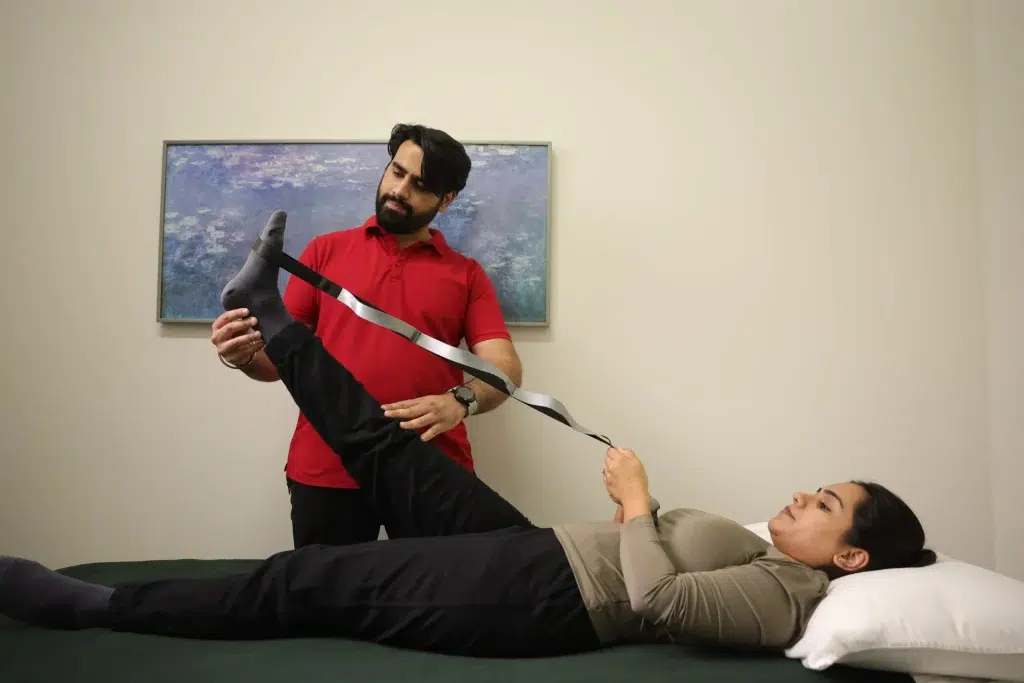
Treat the injury
A sprained ankle from a Tuesday-night rec league game, a shoulder that has stopped tolerating serves, a knee that swells after every practice. Injury care begins with a one-on-one assessment with a registered physiotherapist, a working diagnosis and a treatment plan you understand.
Build the athlete
A club player who wants to stop pulling the same hamstring every August, a masters runner chasing a Boston qualifier, a junior goalie whose hips are starting to complain. Performance work runs through our Return2Play program: movement screening, objective testing and a structured progression toward the demands of your sport. Many athletes move from one path to the other as they recover.
Your story first
A first appointment is typically 45 to 60 minutes with a registered physiotherapist. We start with what happened, when, what makes it worse, what you have tried and what you need to get back to.
Examination and objective measurement
We examine the injured area and the areas that load it. Where it helps, we use objective movement assessment to measure movement during real tasks, and Functional Movement Screen and SFMA for a structured picture of how you move. For suspected concussion, our concussion management service includes NeuroCatch® measurement as one input alongside the clinical examination.
What you leave with
What we think is going on, what we recommend, roughly how long it should take, and what you can do at home starting that day. If something needs a physician, imaging or a professional, we say so and help you get there.

What Return To Sports Means At In Step Physical Therapy
Return to play is a staged process, not a date on a calendar. It moves through pain and swelling control, restoring range and strength, rebuilding sport-specific movement such as cutting, landing, throwing and skating, then graded return to training and finally competition. Each stage has criteria we test before moving on.
For contact and collision sports, and for any athlete recovering from a concussion, medical clearance from a physician is part of the process and we coordinate with your doctor and, where appropriate, your coach or trainer. We are honest about timelines: some injuries resolve in a few sessions, others take months of consistent work. What we can promise is a plan with clear milestones and a physiotherapist who adjusts it as you progress.
Sports Physiotherapy Edmonton For Youth Athletes
A large share of the athletes we see are under 18: minor hockey and ringette players, club soccer and basketball players, dancers, gymnasts and swimmers. Growing bodies get injured differently. Growth plates are weaker than the tendons that attach to them, which is why conditions such as Osgood-Schlatter disease, Sever’s disease and Little League elbow are so common between roughly ages 9 and 15. We assess with growth stage in mind, involve parents in the plan, and communicate with coaches where the family wants us to.
Growth-related injuries we see most
- Osgood-Schlatter disease (knee)
- Sever’s disease (heel)
- Little League elbow and shoulder
- Low-back stress reactions in gymnasts, dancers and fast bowlers
- Wrist growth-plate stress in gymnastics
Overuse and early particular training
Year-round training in a single sport raises overuse injury risk in growing athletes. We look at total weekly load across teams and training, recommend rest and cross-training where appropriate, and follow a conservative concussion pathway with physician involvement and return-to-learn planning for school. See our pediatric physiotherapy page.
Sports Physical Therapy For Injury Assessment And Return To Sport
Every sport loads the body differently and the injuries follow. Each section below lists the injuries we commonly assess in that sport, how we approach the sports physiotherapy assessment and what the return-to-play pathway usually involves.
Ice And Winter Sports
From Timbits hockey to the Rockies: the sports that fill Edmonton’s rinks, ovals and hills all winter.
Hockey
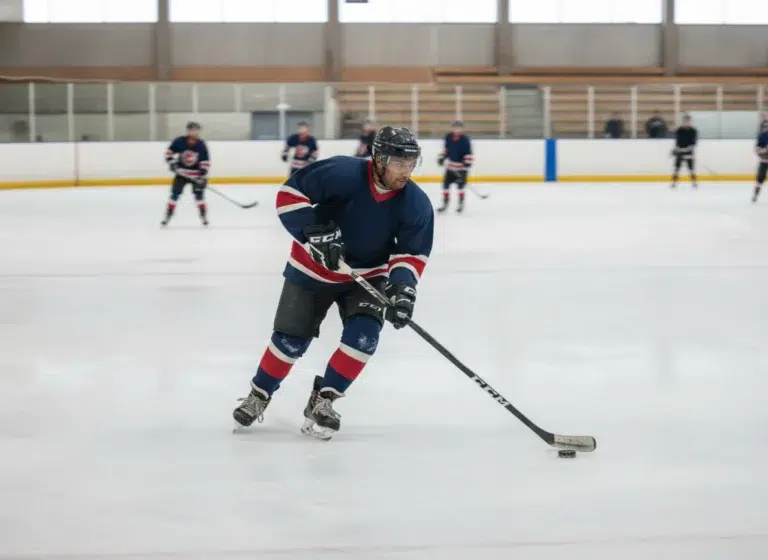
Hockey is the biggest participation sport in Alberta, from Timbits to Junior A, beer league to old-timers. The skating stride loads the hips and groin in a way few other sports do, the position invites low-back stiffness, and the boards and bodies produce contact injuries at every level above novice.
Injuries we commonly assess
- Groin and adductor strains, including recurrent “sports hernia” type pain
- Hip impingement and labral irritation, especially in goalies
- MCL sprains from contact and awkward falls
- Shoulder separations (AC joint) and dislocations from board contact
- Concussion
- Low-back pain and disc-related pain from the flexed skating posture
- Wrist and hand injuries from falls and slashes
What assessment looks like: we look at hip range and strength side to side, adductor and core control, and how you load the stride. For goalies we pay particular attention to hip rotation and butterfly mechanics. Contact injuries get a thorough joint examination and, where needed, a referral for imaging.
Return to play: skating without the puck, then with, then non-contact practice, then full contact, with strength and hip-control criteria at each step. Concussed players follow the medical clearance process before any contact.
Related: Groin pain · Hip pain · Concussion · Shoulder pain · Return2Play
Figure skating

Figure skaters train early, often and hard. Jump landings put several times body weight through one leg, and the sport’s emphasis on flexibility and aesthetics can mask developing problems until they become painful.
Injuries we commonly assess
- Stress reactions and stress fractures of the foot and lower leg
- Patellar tendinopathy and Osgood-Schlatter in growing skaters
- Hip flexor and labral irritation
- Low-back pain, including stress reactions in adolescents
- Ankle impingement from repeated deep plantarflexion
What assessment looks like: we assess landing mechanics, single-leg strength and control, growth-plate related concerns in younger skaters, and boot and blade fit as a contributing factor.
Return to play: is built around graded jump volume, with objective strength and hop-test criteria before returning to full run-throughs.
Related: Knee pain · Pediatric physiotherapy · Dance injuries
Curling
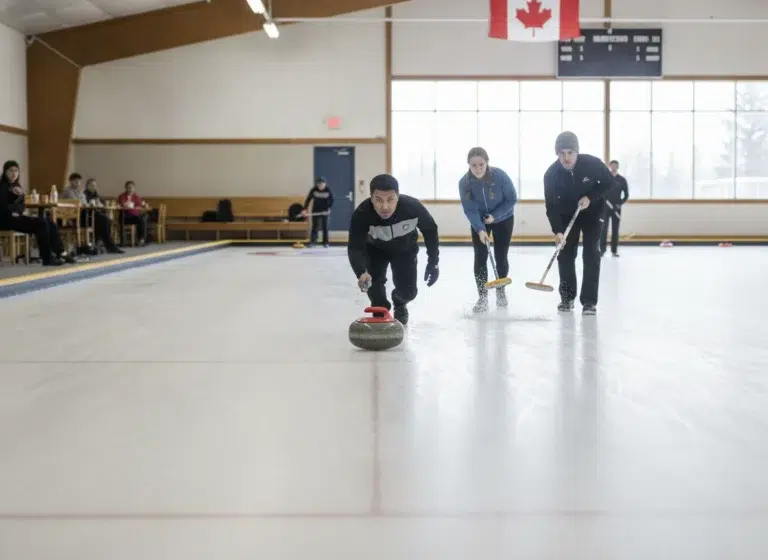
Curling looks gentle, but the delivery slide loads the lead knee and hip in deep flexion, and sweeping is a repetitive, high-effort upper-body task that adds up over a season and a career.
Injuries we commonly assess
- Knee pain in the sliding leg, including meniscus and patellofemoral problems
- Hip and groin strains from the lunge
- Low-back pain from delivery and sweeping
- Shoulder and elbow overuse from sweeping
- Falls on ice, particularly in older curlers
What assessment looks like: we look at delivery mechanics, knee and hip range, and shoulder tolerance for sweeping loads. For older curlers we include balance and fall-risk screening.
Return to play: is guided by pain-free delivery and sweeping at increasing intensity, often with equipment or technique adjustments.
Related: Knee pain · Fall prevention · Older adults
Ringette

Ringette is played at scale in Edmonton and across Alberta, with many athletes competing from the U10 level through to open and masters divisions. The skating and ring-carrying demands look like hockey, but the stick-in-hand, straight-arm carrying position and frequent pivots produce a slightly different injury profile.
Injuries we commonly assess
- Groin and hip flexor strains
- Ankle sprains from edge catches
- Wrist and thumb injuries from falls onto the stick hand
- Knee ligament sprains, particularly in adolescent players
- Low-back and hip stiffness in older masters players
What assessment looks like: we screen skating mechanics, hip control and single-leg balance, and check the wrist and hand carefully after falls, which are often under-reported.
Return to play: follows the same staged pathway as hockey, with an emphasis on pivot and stop-start tolerance before full scrimmage.
Related: Groin pain · Ankle sprains · Youth athletes
Speed skating
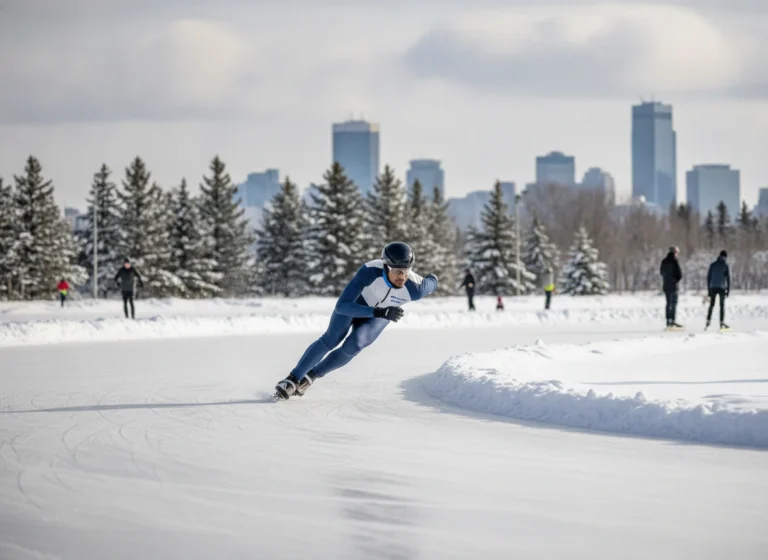
Edmonton has a long speed-skating tradition, from club programs at the Victoria and Argyll ovals to short-track at the city’s arenas. The deep crouch and repeated crossovers concentrate load in the low back, hips and knees.
Injuries we commonly assess
- Low-back pain from sustained flexion
- Patellofemoral pain
- Hip flexor tightness and impingement
- Adductor strains from crossovers
- Short-track contact injuries and lacerations
What assessment looks like: we assess hip and trunk endurance in the skating position, knee tracking under load, and asymmetry between the inside and outside legs through the corner.
Return to play: progresses from straight-line skating to corners at increasing speed, then pack skating.
Skiing and snowboarding

Rabbit Hill, Snow Valley and Sunridge are minutes away, and Jasper, Marmot and the Banff resorts are a weekend habit for many Edmontonians. Skiing injuries concentrate in the knee; snowboarding injuries in the wrist, shoulder and ankle.
Injuries we commonly assess
- ACL and MCL injuries from twisting falls (skiing)
- Skier’s thumb (ulnar collateral ligament)
- Wrist fractures and sprains (snowboarding)
- Shoulder dislocations and AC joint injuries
- Ankle sprains and “snowboarder’s ankle” (talar fracture)
- Concussion
- Low-back pain from long days and cold muscles
What assessment looks like: we examine the knee thoroughly for ligament stability, refer for imaging where indicated, and assess the whole leg for strength and control. Pre-season screening is available for those returning after injury.
Return to play: after a ligament injury or surgery is a months-long progression; we plan it against the ski season so expectations are realistic.
Related: ACL injuries · Knee pain · Concussion · Post-surgical rehab
Field And Court Sports
Summer fields, indoor courts and year-round leagues: sprinting, cutting, jumping and contact.
Soccer
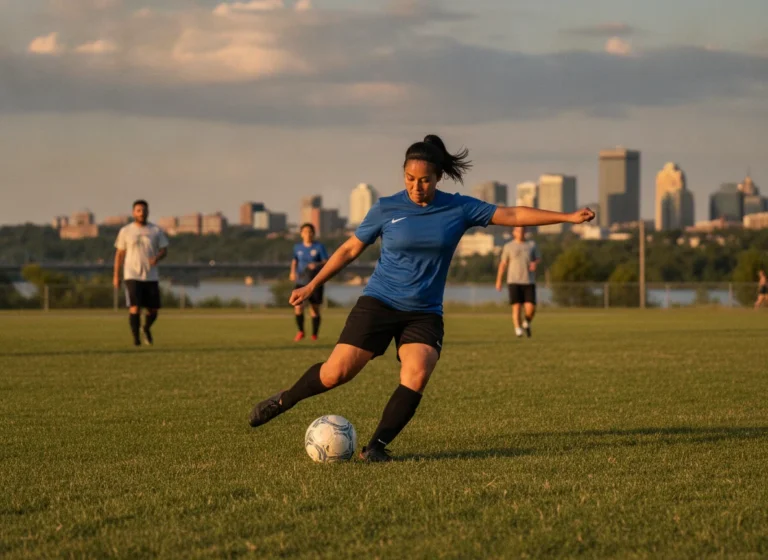
Soccer is Alberta’s largest summer participation sport and, with indoor leagues, a year-round one. Sprinting, cutting, kicking and contact generate a wide injury range, and the youth game in particular sees high rates of growth-related knee and heel pain.
Injuries we commonly assess
- Hamstring strains
- ACL and meniscus injuries, with higher rates in female athletes
- Ankle sprains
- Groin and hip flexor strains
- Osgood-Schlatter and Sever’s disease in growing players
- Concussion from head-to-head and head-to-ground contact
- Quadriceps contusions
What assessment looks like: we assess sprint and cutting mechanics, hamstring and hip strength, landing control and ankle stability.
Return to play: moves through straight-line running, change of direction, ball work, non-contact training, and full training before match play, with strength and hop-test criteria at each stage.
Related: Hamstring injuries · ACL injuries · Ankle sprains · Concussion
Rugby
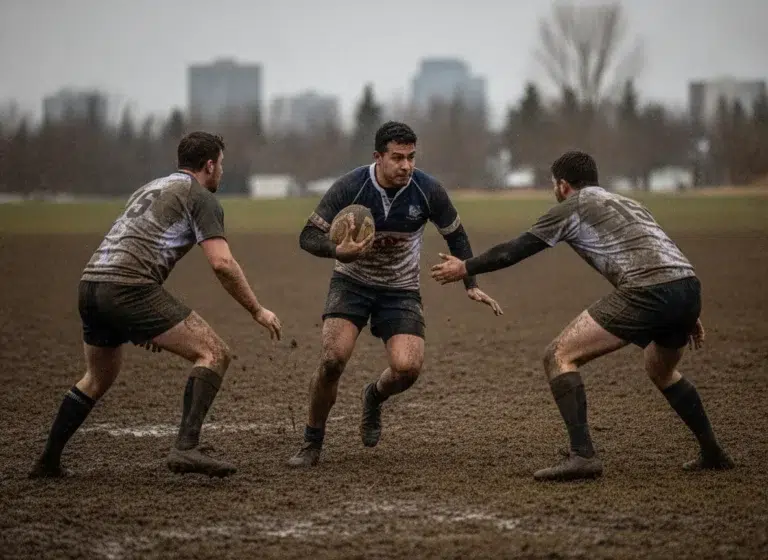
Rugby has a committed club community in Edmonton across men’s, women’s and age-grade competition. Tackling, rucking and scrummaging produce contact injuries; the running game produces the same soft-tissue injuries as other field sports.
Injuries we commonly assess
- Concussion
- Shoulder dislocations and AC joint injuries from tackling
- Neck and cervical injuries
- Knee ligament injuries
- Hamstring and calf strains
- Finger and thumb injuries
- Facial and rib injuries
What assessment looks like: includes a careful neck and shoulder examination for contact injuries, strength testing around the shoulder for tackle tolerance, and a full concussion assessment where head impact is suspected.
Return to play: follows the graduated return-to-play protocol used in rugby, with physician clearance and progression through non-contact to full-contact training.
Related: Concussion management · Shoulder pain · Neck pain
Basketball

Basketball is played year-round in Edmonton school gyms, community leagues and university programs. Repeated jumping and landing, hard cuts and contact under the basket drive its injury profile.
Injuries we commonly assess
- Ankle sprains, the most common basketball injury by a wide margin
- Patellar tendinopathy (“jumper’s knee”)
- ACL injuries, particularly in female athletes
- Finger and thumb sprains and dislocations
- Achilles tendinopathy and calf strains
- Stress fractures of the foot and shin
- Low-back pain
What assessment looks like: we look at landing mechanics, ankle stability and proprioception, jump and hop symmetry, and tendon load tolerance. Objective jump testing helps set clear benchmarks.
Return to play: progresses from straight-line running to jumping and landing, cutting, shooting drills, non-contact practice and then full practice.
Related: Ankle sprains · Knee pain · ACL injuries
Baseball and softball

Edmonton’s baseball and softball diamonds are busy from May through August, and indoor training keeps arms working through winter. Throwing is the dominant injury mechanism; sliding and collisions add the rest.
Injuries we commonly assess
- Shoulder overuse: rotator cuff, labral irritation and impingement
- Elbow injuries including “Little League elbow” and ulnar collateral ligament strain
- Hamstring strains
- Ankle and knee injuries from sliding
- Low-back pain from rotational load in hitting and pitching
- Oblique strains
What assessment looks like: we assess the whole throwing chain: hip and trunk rotation, scapular control, shoulder range and strength, and throwing volume history, which is often the real cause in youth pitchers.
Return to play: uses a structured interval throwing program that increases distance and intensity in stages before returning to competitive pitching.
Related: Shoulder pain · Elbow injuries · Youth athletes
Tennis, pickleball, padel and badminton
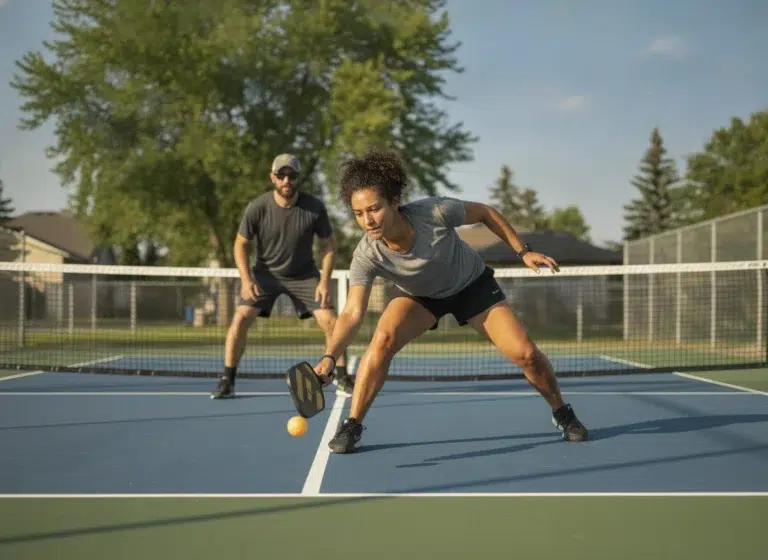
Racquet sports in Edmonton run indoors all winter and outdoors all summer. Pickleball is the fastest-growing sport in the city, padel has arrived with dedicated courts, and tennis and badminton have deep club roots. In Step is a proud community supporter of Padel Zone and the Edmonton Pickleball Club.
Injuries we commonly assess
- Tennis elbow and golfer’s elbow
- Shoulder impingement and rotator cuff overload from serving and smashing
- Calf strains (“tennis leg”) and Achilles injuries, common in players returning after time off
- Ankle sprains from lateral movement
- Wrist tendinopathy
- Low-back pain from rotation and serving
- Knee pain from repeated lunging
What assessment looks like: we look at serve and stroke mechanics, shoulder and forearm strength, lateral movement control and, for older players new to pickleball, general strength and balance.
Return to play: progresses through controlled rallying to serving and full-court movement, with attention to weekly playing volume, which is the most common cause of relapse.
Related: Tennis elbow · Shoulder pain · Elbow, wrist and hand
Football
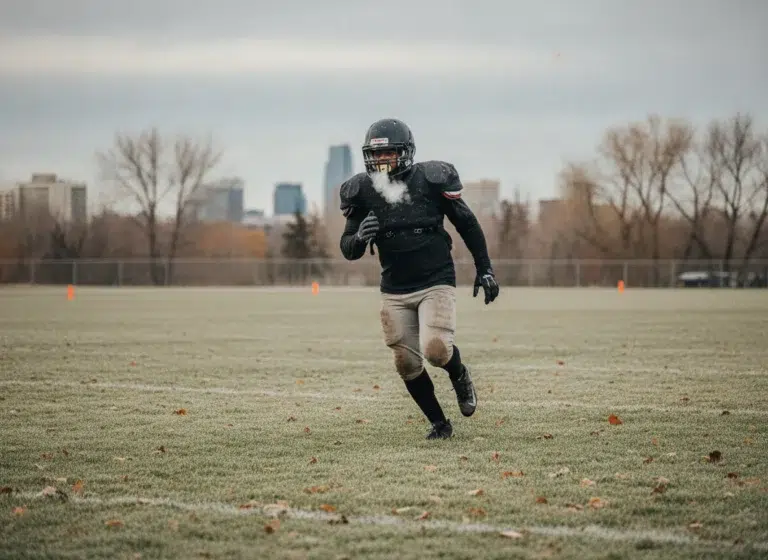
From bantam and high-school programs to the university and semi-professional levels, football in Edmonton is a collision sport played through the fall on cold, hard fields. Injuries cluster around contact, explosive acceleration and the demands of specific positions.
Injuries we commonly assess
- Concussion
- Shoulder dislocations, separations and rotator cuff injuries
- ACL, MCL and meniscus injuries
- Hamstring and quadriceps strains
- Ankle sprains and high (syndesmosis) ankle sprains
- Turf toe
- Neck stingers and cervical strains
- Low-back stress reactions in linemen
What assessment looks like: we examine contact injuries carefully, coordinate with team medical staff where present, and assess position-specific demands: linemen and skill players do not need the same rehabilitation.
Return to play: requires physician clearance for contact. We progress through non-contact drills, controlled contact and full practice, with strength and power benchmarks before game clearance.
Related: Concussion management · Shoulder injuries · Neck pain · ACL injuries
Lacrosse

Box lacrosse is a spring and summer staple in Alberta arenas, and field lacrosse continues to grow. Both combine sprinting and cutting with stick contact and body checking in a confined space.
Injuries we commonly assess
- Shoulder and AC joint injuries from checks and boards
- Hand, wrist and forearm injuries from slashes
- Ankle sprains
- Hamstring and groin strains
- Concussion
- Low-back pain from the flexed, rotated shooting position
What assessment looks like: we assess rotational strength and control through the trunk and shoulder, sprint and cutting mechanics, and any contact injury in detail.
Return to play: progresses from running to stick work, to non-contact drills, to controlled contact and full play.
Related: Shoulder pain · Ankle sprains · Concussion
Volleyball

Alberta produces strong volleyball athletes at the club, school and university level, and beach volleyball has grown in the summer. The sport is defined by jumping, overhead hitting and diving.
Injuries we commonly assess
- Shoulder impingement and rotator cuff overload in hitters
- Patellar tendinopathy
- Ankle sprains, often from landing on a teammate or opponent at the net
- Finger injuries from blocking
- Low-back pain from arching and rotation in the attack
- Knee ligament injuries
What assessment looks like: we assess shoulder range, rotator cuff and scapular strength, hitting mechanics, jump-landing control and ankle stability.
Return to play: is built around graded jumping and hitting volume, with shoulder strength and jump-test criteria before returning to full training.
Related: Shoulder pain · Knee pain · Ankle sprains
Cricket
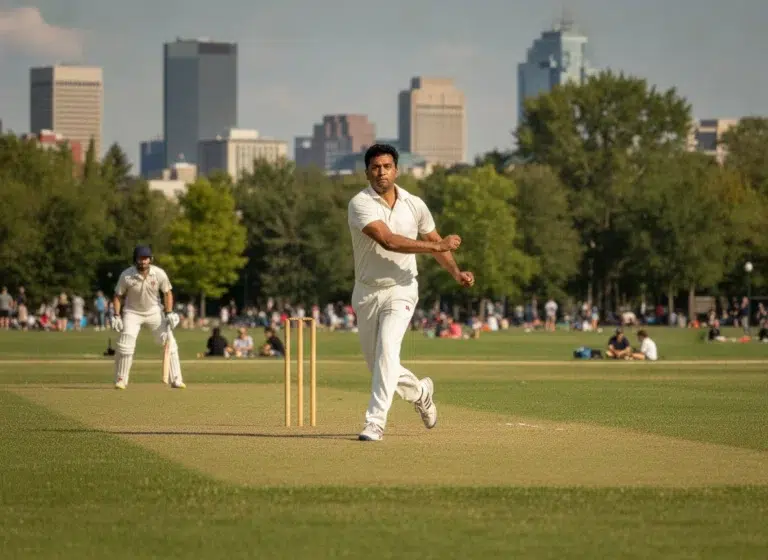
Cricket has grown quickly in Edmonton, with the Edmonton and District Cricket League running competitive divisions across the summer and clubs such as Strathcona Cricket Club fielding multiple teams. In Step is a proud community supporter of the EDCL. Fast bowling is one of the most demanding repetitive actions in sport, and the fielding and batting sides bring their own problems.
Injuries we commonly assess
- Low-back pain and stress reactions in fast bowlers
- Shoulder overuse from throwing and bowling
- Hamstring and calf strains
- Side (oblique) strains in bowlers
- Hand and finger injuries from catching and impact
- Ankle sprains from landing in the delivery stride
- Knee pain in batters and wicketkeepers from squatting and running
What assessment looks like: we assess bowling mechanics and bowling load, trunk and hip control, shoulder strength and any low-back symptoms carefully in young fast bowlers, where early management matters.
Return to play: for bowlers uses graded bowling volume and intensity with clear weekly targets; for fielders and batters, a return to running, throwing and impact drills in stages.
Related: Back pain · Shoulder pain · Hamstring injuries · Return2Play
Endurance And Outdoor Sports
River valley trails, pools and mountains: mostly overuse injuries from load rising faster than tissue adapts.
Running

The river valley trail system, the Edmonton Marathon and a large club scene make running one of the city’s most popular activities. Most running injuries are overuse injuries: the result of load rising faster than tissue can adapt, often after a winter off or a sudden jump in mileage. Our lead physiotherapist holds a Running Specialist certification.
Injuries we commonly assess
- Runner’s knee (patellofemoral pain) and iliotibial band syndrome
- Shin splints and tibial stress reactions
- Achilles tendinopathy and calf strains
- Plantar fasciitis
- Hamstring and hip flexor strains
- Gluteal tendinopathy and hip pain
- Stress fractures of the foot and shin
What assessment looks like: we review your training history in detail, assess strength and control at the hip, knee and foot, and analyse running mechanics using video where useful. Footwear and surface are part of the conversation.
Return to play: is a planned return to volume, usually walk-run intervals progressing to continuous running, with weekly load capped and adjusted according to symptoms.
Related: Knee pain · Plantar fasciitis · Achilles tendinopathy · Hip pain
Swimming and triathlon
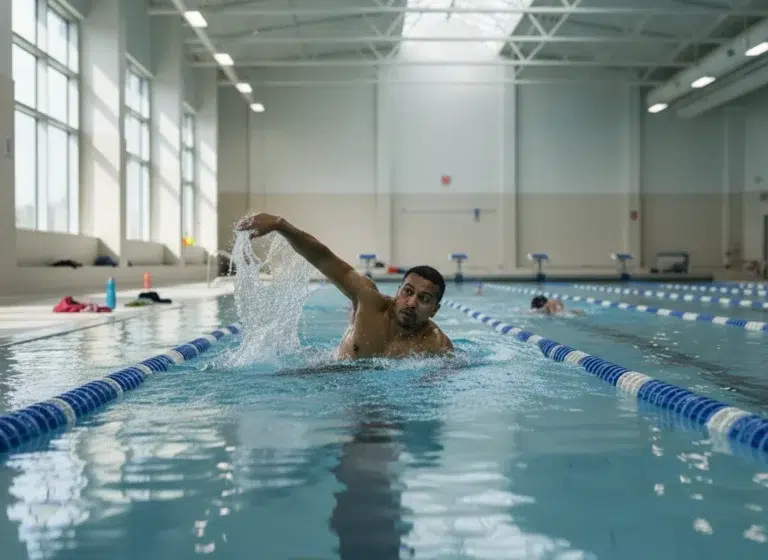
Edmonton has a strong club swimming program and a growing triathlon community that trains through the winter in pools and on indoor trainers. Swimming injuries are dominated by the shoulder; triathletes add running and cycling injuries and the challenge of balancing three sports’ worth of load.
Injuries we commonly assess
- Swimmer’s shoulder: impingement and rotator cuff overload
- Neck pain from breathing rotation
- Low-back pain, particularly in butterfly and breaststroke
- Breaststroker’s knee (MCL irritation)
- Hip flexor tightness
- Running and cycling overuse injuries in triathletes
What assessment looks like: we assess shoulder range and strength, scapular control, thoracic mobility and stroke mechanics, and for triathletes review total weekly load across all three disciplines.
Return to play: uses graded swim volume and stroke selection, with dryland strength work to support the shoulder.
Related: Shoulder pain · Neck pain · Knee pain
Hiking and trail

Jasper, Banff, Kananaskis and the Rockies’ foothills are weekend destinations for many Edmontonians, and long descents with a pack are hard on the knees and feet, particularly early in the season.
Injuries we commonly assess
- Knee pain on descents (patellofemoral pain)
- Ankle sprains on uneven ground
- Plantar fasciitis and Achilles pain
- Iliotibial band syndrome
- Low-back pain from pack load
- Blisters and forefoot pain
What assessment looks like: we look at leg strength and control on step-downs, ankle stability, footwear and pack fit, and build a pre-trip conditioning plan where needed.
Return to play: is a return to distance and elevation in stages, with strength work targeting descending control.
Related: Knee pain · Ankle sprains · Plantar fasciitis
Cycling and mountain biking

Road cycling, commuting, gravel and the mountain-bike trails of the river valley all place the body in a sustained, repetitive position. Cycling injuries are mostly overuse and bike-fit related; mountain biking adds falls.
Injuries we commonly assess
- Anterior knee pain and patellar tendinopathy
- Low-back and neck pain from riding position
- Hand and wrist numbness (ulnar and median nerve compression)
- Hip flexor tightness and impingement
- Iliotibial band irritation
- Collarbone fractures, AC joint injuries and wrist fractures from falls (mountain biking)
- Concussion from falls
What assessment looks like: includes a functional review of your position on the bike, hip and knee mechanics through the pedal stroke, trunk and neck endurance, and any fall-related injury.
Return to play: is graded by duration and intensity, often with bike-fit adjustments and off-bike strength work before returning to long or high-intensity rides.
Climbing

Indoor climbing gyms have multiplied across Edmonton and the mountains are a few hours away. Climbing concentrates load in the fingers, elbows and shoulders in ways few other sports do, and the injuries are correspondingly specific.
Injuries we commonly assess
- Finger pulley injuries (A2 pulley strains and ruptures)
- Climber’s elbow (medial and lateral epicondylalgia)
- Shoulder impingement, labral irritation and instability
- Wrist tendinopathy
- Ankle sprains and heel injuries from bouldering falls
- Neck pain from belaying
What assessment looks like: we examine the hand and fingers carefully, assess shoulder strength and control through the range climbing demands, and review training load and grade progression.
Return to play: starts with easy volume on large holds and progresses through hold size, steepness and intensity, with hangboard loading introduced only when criteria are met.
Related: Elbow, wrist and hand · Shoulder pain · Ankle sprains
Strength And Combat Sports
Barbells, mats and rings: load management, technique and contact injuries.
CrossFit, weightlifting and powerlifting
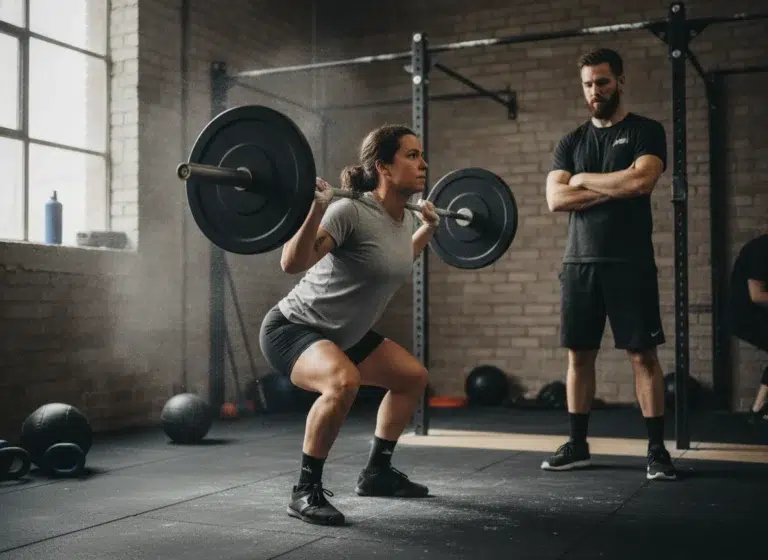
Strength sport has a large community in Edmonton across CrossFit boxes, Olympic weightlifting clubs and powerlifting gyms. The injuries are usually load-management and technique related, and rehabilitation works best when it keeps you training around the problem rather than stopping altogether.
Injuries we commonly assess
- Low-back pain and disc-related pain from deadlifts and squats
- Shoulder impingement and rotator cuff injuries from overhead work
- Wrist and elbow pain from front rack and kipping
- Knee pain and patellar tendinopathy
- Hip impingement in deep squats
- Pectoral and biceps tendon injuries
What assessment looks like: we assess lifting mechanics for the movements that provoke symptoms, mobility at the hips, thoracic spine, shoulders and ankles, and your training programming and recovery.
Return to play: keeps you in the gym with modified loads and movement selections, progressing back to full intensity against objective strength criteria.
Related: Back pain · Shoulder pain · Knee pain
Martial arts, wrestling, boxing and MMA
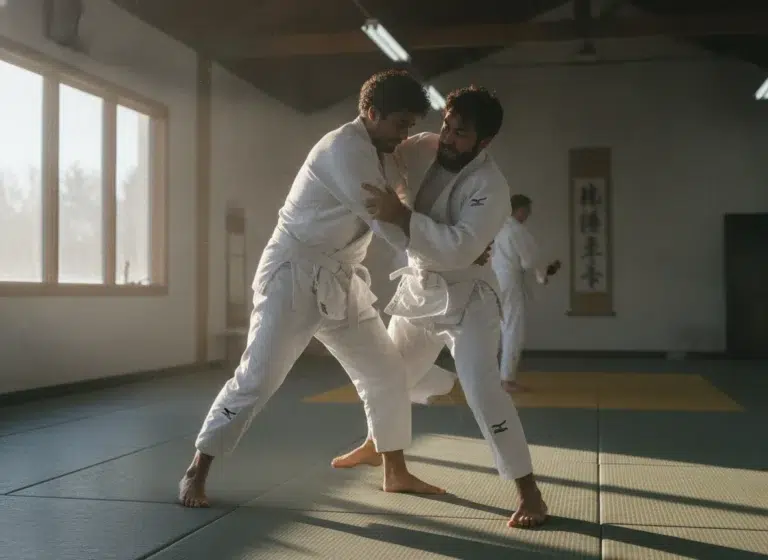
Edmonton has active communities in judo, taekwondo, karate, Brazilian jiu-jitsu, wrestling, boxing and mixed martial arts. These sports combine high-intensity conditioning with grappling, striking and impact, and their injuries reflect all three.
Injuries we commonly assess
- Concussion and head impact
- Neck strains and cervical injuries from throws and takedowns
- Shoulder dislocations and AC joint injuries
- Finger, hand and wrist injuries from striking and gripping
- Knee ligament injuries from twisting under load
- Rib injuries
- Cauliflower ear and skin issues (which we will refer on)
What assessment looks like: includes a thorough concussion screen where indicated, joint stability testing for grappling injuries, and strength and control assessment for the specific demands of your discipline.
Return to play: requires physician clearance for any return to sparring after concussion. We progress through solo drilling, controlled partner work, light sparring and full contact.
Related: Concussion management · Neck pain · Shoulder pain
Artistic And Precision Sports
Range, control and repetition: dance, gymnastics, golf and para sport.
Dance

Ballet, contemporary, jazz, hip hop and competitive dance run year-round in Edmonton studios and companies. In Step Physical Therapy is a proud community supporter of Ballet Edmonton. Dance demands extreme range, precise control and high repetition, and its injuries reflect that. Our dedicated dance injuries page covers this in more depth.
Injuries we commonly assess
- Ankle impingement and sprains
- Stress fractures of the foot and shin
- Hip impingement and labral irritation
- Patellofemoral pain
- Low-back pain and stress reactions
- Snapping hip and hip flexor problems
- Achilles and flexor hallucis longus tendinopathy
What assessment looks like: we assess turnout, range and control at the hip, ankle and foot, strength through the full range dance requires, and technique in the movements that provoke symptoms.
Return to play: is planned around class and rehearsal schedules, progressing from barre to centre to jumps and pointe work with clear criteria.
Related: Dance injuries · Hip pain · Ankle sprains
Golf

Edmonton’s courses are busy from April to October, and simulator golf keeps swings going through winter. Golf injuries are mostly rotational overuse injuries. Our lead physiotherapist is a Titleist Performance Institute (TPI) certified golf clinician, and our golf physiotherapy page and NeuroGolf program cover this in depth.
Injuries we commonly assess
- Low-back pain
- Golfer’s elbow and tennis elbow
- Shoulder impingement, especially in the lead shoulder
- Wrist tendinopathy
- Hip pain and impingement
- Neck pain
What assessment looks like: uses the TPI movement screen to identify the physical limitations driving swing faults and pain, alongside a standard physiotherapy examination.
Return to play: progresses from chipping and putting to short irons and full swings, with range and strength criteria at each step.
Related: Golf physiotherapy · NeuroGolf · Back pain
Gymnastics and cheer
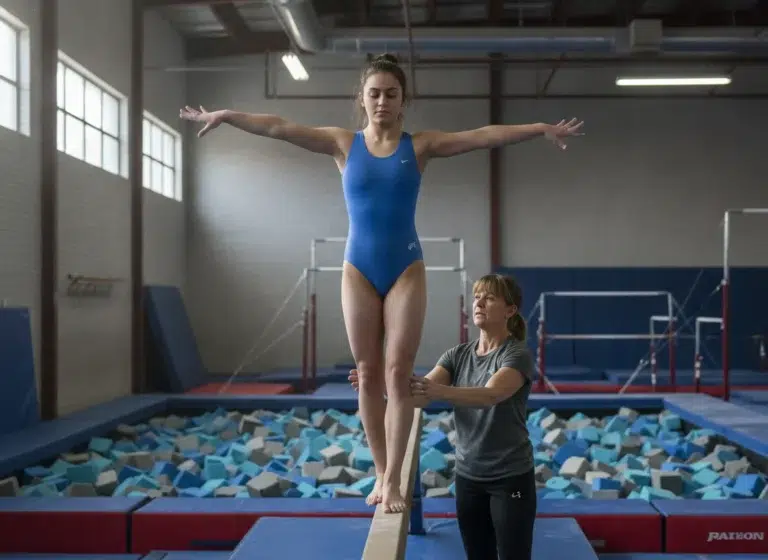
Artistic gymnastics, trampoline and competitive cheer all involve young athletes training at high volume while their bodies are still growing. Many injuries are growth-plate and overuse related and respond well to early management.
Injuries we commonly assess
- Wrist pain and growth-plate stress from weight bearing on the hands
- Low-back pain and spondylolysis
- Elbow injuries including osteochondritis dissecans
- Ankle sprains and heel pain (Sever’s disease)
- Shoulder instability
- Knee pain and Osgood-Schlatter
What assessment looks like: we take growth stage into account in every examination, refer for imaging where growth-plate injury is suspected, and assess strength, control and training load with the coach where possible.
Return to play: follows the same staged criteria as other sports, with particular caution around back and elbow injuries in young athletes.
Related: Pediatric physiotherapy · Elbow, wrist and hand · Back pain
Wheelchair and para sport
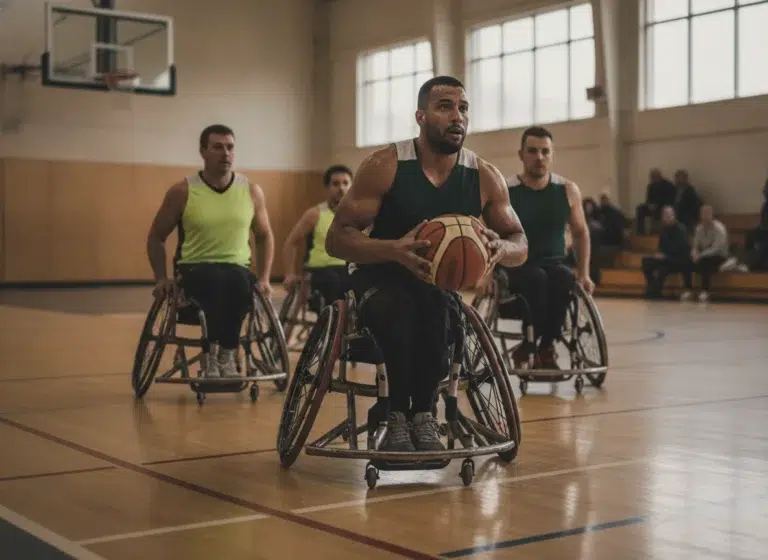
Wheelchair basketball, rugby, sledge hockey, para athletics and adaptive fitness are well established in Alberta. In Step is a proud community supporter of Wheelchair Sports Alberta. Para athletes face high shoulder and wrist loads and injury patterns that depend on the individual and the sport.
Injuries we commonly assess
- Shoulder impingement and rotator cuff injuries from propulsion and transfers
- Wrist and hand overuse, including carpal tunnel syndrome
- Elbow tendinopathy
- Neck and upper-back pain
- Skin and pressure issues (which we will flag and refer on)
What assessment looks like: we assess shoulder and upper-limb strength, propulsion and transfer mechanics, chair set-up where it affects load, and the individual’s baseline function.
Return to play: is individualised to the athlete and the sport, with the same staged, criteria-based approach.
Related: Shoulder pain · Neurological physiotherapy · Elbow, wrist and hand
How We Approach Sports Physiotherapy At In Step Physical Therapy
Whether you arrive with an acute injury or a nagging problem that will not settle, the process is the same: understand the athlete, measure what matters, treat with intent and progress against criteria.
Injured Playing The Sport You Love? Start With An Assessment
Sports Physiotherapy For Sports Injuries
If you already know what is hurt, go straight to the page for it.
Ankle sprain
Sports where we see it most: Basketball, soccer, volleyball, hiking, dance.
Hamstring strain
Sports where we see it most: Soccer, football, running, cricket.
Knee pain and patellofemoral pain
Sports where we see it most: Running, cycling, curling, dance.
Tennis and golfer's elbow
Sports where we see it most: Racquet sports, golf, climbing.
Low-back pain
Sports where we see it most: Cricket, golf, weightlifting, speed skating.
Foot pain, plantar fasciitis and Achilles
Sports where we see it most: Running, hiking, basketball.
Read about foot pain, plantar fasciitis and achilles treatment →
Post-surgical rehabilitation
Sports where we see it most: Any sport after ACL, shoulder or fracture surgery.

Technologies and Services We Use in Sports Rehabilitation
Objective measurement where it changes decisions: wearable movement sensors, brain-function measurement within concussion management, neuromuscular stimulation and virtual-reality rehabilitation, alongside hands-on care.
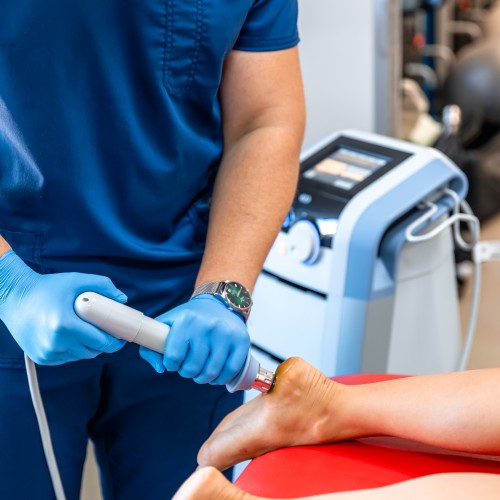
Shockwave Therapy
Breaks down scar tissue, reduces chronic pain, and promotes faster tissue repair.
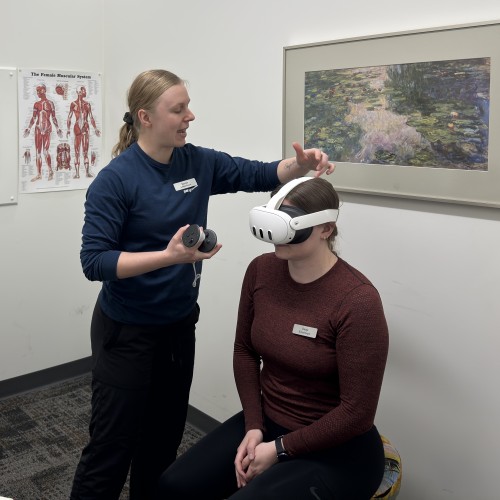
Virtual Reality
Creates safe, interactive environments to retrain balance, movement, and coordination.
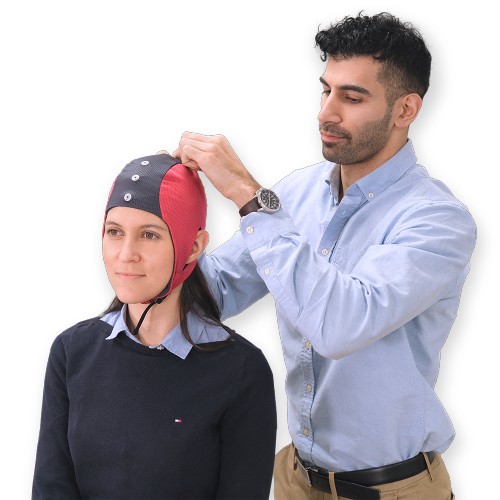
NeuroCatch®
A non-invasive brain function assessment tool that helps track cognitive recovery after concussion or head trauma.

Frenzel Goggles
Assists in diagnosing dizziness and vestibular disorders, often caused by whiplash or concussion.

Footmaxx Orthotics
Custom orthotics to improve walking mechanics and relieve lower limb or back pain.

Iron Neck Training
A tailored device to rebuild neck strength and stability after whiplash or cervical injuries.
Is Sports Physiotherapy Covered By Insurance?
Most extended health plans in Alberta cover sports physiotherapy Edmonton, and we bill most insurers directly so you can focus on recovery instead of paperwork. No physician referral is needed to book, though some insurers ask for one to reimburse claims.
Do I need a referral?
No. Physiotherapists in Alberta are primary-contact practitioners. Some insurers ask for a physician referral to reimburse; we can tell you whether yours does.
Which insurers do you bill directly?
Most major extended health providers. Call us before your first visit and we will confirm your coverage.
What if the injury happened at work or in a car accident?
Work injuries are handled through WCB and car-accident injuries through the MVA insurer. We manage the paperwork in both cases.
Is sports massage covered?
Most plans include massage therapy as a separate benefit. Our registered massage therapists provide sports massage and it can be booked alongside sports physiotherapy Edmonton.

Why Athletes Choose In Step Physical Therapy
Downtown Edmonton since 2001, with a team that treats sport as a normal part of life, not a unique case.
Experienced, credentialed team
Our lead physiotherapist has more than 25 years in orthopaedic and sports rehabilitation, with FMS, SFMA, Running Professional, TPI golf and ITPT concussion certifications. The team includes physiotherapists with sports interests, athletic therapy and sports physiotherapy Edmonton.
Treatment and performance under one roof
Injury care and the Return2Play performance program in the same clinic, so recovery flows into prevention without changing providers.
Objective measurement
structured movement screening and NeuroCatch measurement within concussion management, so return-to-play decisions rest on data as well as judgement.
Direct billing, no referral needed
We bill most extended health insurers directly, and physiotherapists in Alberta are primary-contact practitioners.
Part of Edmonton sport
Proud community supporters of the Edmonton and District Cricket League, Ballet Edmonton, Padel Zone, the Edmonton Pickleball Club and Wheelchair Sports Alberta.
Ready To Get Back To Your Sport?
Book a one-on-one assessment with a registered physiotherapist. No referral needed, direct billing to most plans.
Frequently Asked Questions About Sports Physiotherapy Edmonton
Getting started
Do I need a referral to see a sports physiotherapist in Alberta?
No. Physiotherapists in Alberta are primary-contact practitioners, so you can book directly. Some insurers ask for a physician referral to reimburse claims; we can tell you whether yours does.
How soon after a sports injury should I get assessed?
Sooner is generally better. Early assessment lets us rule out injuries that need medical attention, start appropriate treatment, and avoid the deconditioning that comes from waiting. If you have severe pain, an obvious deformity, cannot bear weight, or have any concussion symptoms, seek medical care first.
How long until I can play again?
It depends on the injury, the sport and you. A simple ankle sprain may take two to six weeks; an ACL reconstruction typically takes nine months or more before full return. After your assessment we give you an honest estimate and a plan with milestones.
Do you work with my coach or team?
Yes, with your permission. We are happy to share return-to-play criteria and progress with coaches, trainers and team physicians so everyone is working from the same plan.
Can you help me avoid getting injured in the first place?
Yes. Pre-season screening, movement assessment and a structured strength and conditioning plan reduce injury risk in most sports. Our Return2Play program is designed for exactly this.
Recovery and return to play
Do you treat youth athletes?
Yes, a large proportion of our sports patients are under 18. We assess with growth stage in mind and involve parents throughout.
What if my injury happened during a game and I have a concussion?
Stop playing and do not return the same day. See a physician, then book a concussion assessment with us. Our concussion management service coordinates return-to-learn and return-to-play with your doctor.
Is sports physiotherapy covered by insurance?
Most extended health plans in Alberta cover physiotherapy, and we bill most insurers directly. Sport-related injuries from motor vehicle accidents or at work are handled through the relevant insurer or WCB.
Do you offer sports massage?
Yes, our registered massage therapists provide sports massage and it can be booked alongside physiotherapy.
Where is the clinic?
We are at 10667 113 Street NW in downtown Edmonton, open six days a week. Early-morning and evening appointments are available.
Physiotherapists Who Treat Athletes



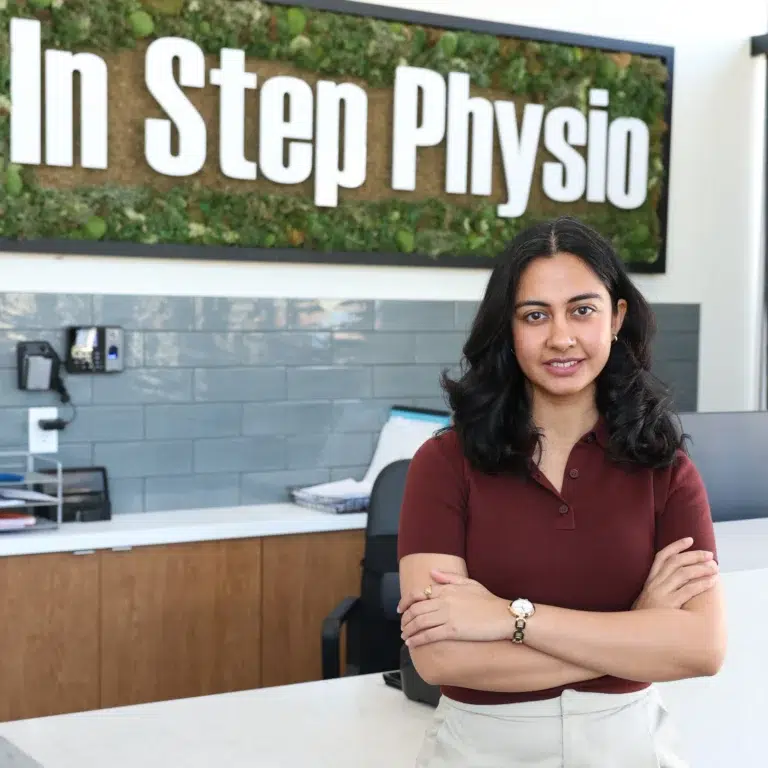
Our team is here to answer your questions and get you back to your sport
What Our Patients Say
Real reviews from patients of In Step Physical Therapy on Google.
- Address - 10667 113 St NW, Edmonton, AB T5H 3H6
- Phone - (587) 409-1754
- Email - info@instepphysio.ca
- Business Hours - Mon – Fri: 8 am – 8 pm
- Business Hours - Sat: 8 am – 4 pm