
How to Prevent Slips and Falls During Edmonton Winters
Table of Contents
Winter in Edmonton brings beautiful snowy landscapes, but it also turns everyday walking into a challenge. One minute, you’re walking comfortably; the next, an icy patch catches you off guard. From slippery parking lots to snow-covered sidewalks, winter conditions can make even short trips unpredictable.
Slips and Falls are a common concern during colder months, particularly for older adults and people experiencing balance difficulties. While choosing proper footwear helps, your body’s ability to maintain stability matters too.
That’s where fall prevention physiotherapy in Edmonton can make a difference.
Why Are Slips and Falls More Common During Edmonton Winters?
Edmonton’s changing temperatures create conditions where melted snow can refreeze into thin, slippery layers of ice.
An icy sidewalk may look perfectly safe until you step onto it. Snow can also hide uneven pavement, while bulky winter clothing may restrict movement.
Your body’s reaction time matters as well. When your foot unexpectedly slides, your muscles and balance system must respond quickly to help you regain stability.
If you already experience muscle weakness, dizziness, or reduced mobility, these conditions may make walking even more challenging.
Why can a familiar Edmonton walking route suddenly feel unsafe in winter?
Winter conditions can change the surface beneath your feet from day to day. Refreezing moisture, hidden uneven areas, packed snow, and reduced visibility can make it harder to predict how stable the next step will be.
What Are the Safest Ways to Walk on Ice and Snow?
You don’t need to avoid every winter outing, but a few practical changes can improve your walking safety.
Choose Footwear With Reliable Traction
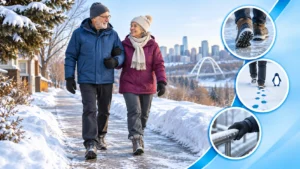
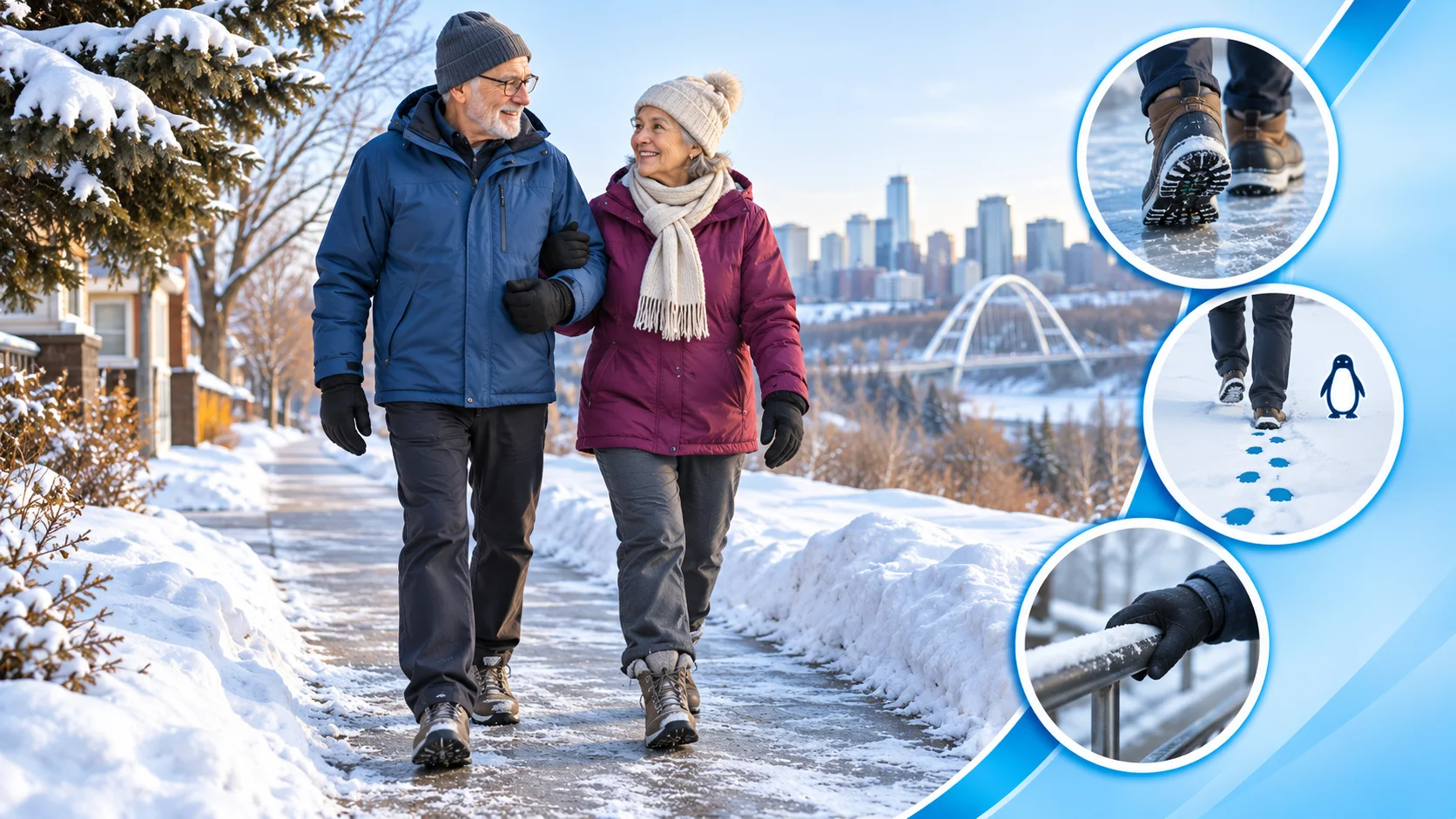
Wear winter boots that fit properly and have slip-resistant soles. Ice cleats or removable traction grips may provide additional support outdoors. Remember to remove cleats indoors, where they can become slippery.
Try the Penguin Walking Technique
To prevent slipping, take shorter steps, walk slowly, keep your feet slightly turned outward, and avoid sudden changes in direction.
Keep your hands out of your pockets so you can use your arms for balance.
Avoid Rushing on Slippery Surfaces
Give yourself extra time when walking to your vehicle, bus stop, or workplace. Choose cleared pathways and use handrails whenever available.
Even simple adjustments can reduce the risk of Slips and Falls during your daily commute.
What should I change about the way I walk when the ground is slippery?
Slow down and give yourself more time to move. Keep your steps short and controlled, avoid sudden turns, and use available railings when needed. Keeping your hands free can also help you react if your balance changes.
How Can You Make Your Home Entrance Safer During Edmonton Winters?
Sometimes, the biggest winter walking risks are right outside your front door. Snow-covered steps, slippery driveways, and poorly lit entrances can increase the chance of losing your footing. A few practical changes can help make your surroundings safer.
Keep Walkways Clear and Ice-Free
Remove snow promptly from your driveway, stairs, and entrance. Apply sand or a suitable ice-melting product to improve traction, particularly after freezing rain or temperature changes.
Improve Outdoor Lighting
Short winter days can make icy patches difficult to notice. Install adequate lighting near entrances, steps, and walking paths so you can identify potential hazards.
Check Handrails and Entrance Mats
Ensure outdoor handrails are secure and easy to grip. Use slip-resistant entrance mats to reduce the risk of slipping on wet floors when moving indoors.
Create a Safe Space for Winter Footwear
Keep a stable chair near your entrance so you can sit while removing winter boots or traction devices. This can reduce unnecessary single-leg balancing on slippery surfaces.
What is one thing homeowners often overlook when preparing an entrance for winter?
The transition between outdoor and indoor surfaces deserves attention. Wet boots can make floors slippery after you enter, so keeping a stable place to sit, using suitable entrance mats, and keeping the area well lit can make that transition safer.
How Can You Improve Balance Before Winter Conditions Become Challenging?
What happens when your foot suddenly lands on an uneven surface? Your body relies on strength, coordination, and sensory information to remain upright.
Practising suitable exercises before winter can help you develop these abilities.
Balance training will include:
- Supported single-leg standing: Helps improve stability while shifting weight onto one leg.
- Heel-to-toe walking: Challenges coordination and controlled foot placement.
- Sit-to-stand exercises: Builds leg strength for everyday movements.
- Controlled stepping activities: Helps improve your ability to adjust your position.
These activities should be performed on a stable, non-slip surface with appropriate support. If you feel unsteady, a physiotherapist can help determine which exercises are safe for you.
What if I already feel a little unsteady before the snow arrives?
That's a good reason to work on your physical stability before winter walking becomes more demanding. A physiotherapist can help identify which areas of strength, coordination, or balance need attention and select exercises that match your abilities.
How Does Fall Prevention Physiotherapy Help During Winter?
Avoiding slippery sidewalks is important, but what if your balance already feels unreliable?
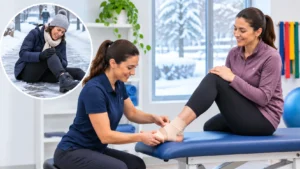
Fall prevention physiotherapy in Edmonton focuses on identifying physical factors that may increase your risk of falling and improving your ability to move safely.
At In Step Physical Therapy, our physiotherapists may provide:
Individual Balance Assessments
We evaluate your standing stability, walking patterns, coordination, and relevant movement limitations to identify areas that need attention.
Personalized Strength and Stability Programs
Our physiotherapists develop exercises targeting your legs, hips, and core muscles to improve the strength needed for everyday mobility.
Gait and Walking Rehabilitation
We assess how you walk, turn, and shift your weight. Based on your needs, we provide movement guidance and appropriate gait exercises.
Vestibular Rehabilitation When Appropriate
If dizziness or vestibular difficulties contribute to unsteadiness, our physiotherapists may recommend suitable vestibular rehabilitation following assessment.
Our goal is to help you build confidence while reducing your risk of Slips and Falls, not simply provide a list of exercises.
What happens if I know I need to work on my balance but don't know where to begin?
A physiotherapy assessment can provide a starting point. At In Step Physical Therapy, your movement, walking, stability, and relevant physical limitations can be considered before exercises and mobility strategies are selected for you.
Who Should Consider Fall Prevention Physiotherapy Before Winter?
You don’t have to experience a serious fall before seeking support.
Physiotherapy may be particularly useful if you:
- Feel unsteady while walking or changing direction.
- Have experienced a previous fall injury.
- Notice weakness or difficulty getting up from a chair.
- Experience dizziness or balance-related concerns.
- Avoid outdoor activities because you’re worried about falling.
For older adults, personalized fall prevention programs can be particularly valuable for maintaining mobility and independence.
If you’ve previously experienced Slips and Falls, an assessment may help identify contributing physical factors.
Do I need to have fallen recently before considering physiotherapy?
No. You can seek support if you're becoming less confident with walking, avoiding activities because of balance concerns, having difficulty with everyday movements, or noticing that getting around feels less steady than it used to.
What Should You Do If You Fall on an Icy Sidewalk?
Even with precautions, accidents can happen.
If you fall, check for pain, dizziness, or difficulty moving before attempting to stand. Avoid putting weight on a painful limb if you suspect a fracture.
Seek urgent medical care after a significant head injury, particularly if you experience confusion, vomiting, worsening headache, or loss of consciousness. Severe pain and an inability to bear weight also require medical assessment.
For less serious injuries, physiotherapy may support your recovery once appropriate medical concerns have been addressed.
After a winter fall, how do I know whether I should try to get back up?
First, pause and check yourself for significant pain, dizziness, weakness, or difficulty moving. If you suspect a serious injury, avoid forcing yourself to stand and seek appropriate medical assistance.
Stay Steady This Winter With In Step Physical Therapy!
Edmonton winters shouldn’t leave you feeling afraid of every outdoor step. Choosing suitable footwear, adjusting your walking habits, and improving your physical stability can help reduce the likelihood of Slips and Falls.
At In Step Physical Therapy, our fall prevention physiotherapy in Edmonton focuses on personalized balance assessments, strengthening exercises, and practical movement strategies to support safer mobility throughout winter.
Don’t wait for a fall to start thinking about your balance!
Book your fall prevention physiotherapy assessment today and take more confident steps this winter.
Author Bio:
Neha Anil Saraf – Registered Physiotherapist
Neha Anil Saraf is a Registered Physiotherapist at In Step Physical Therapy with over 15 years of clinical experience. She holds bachelor’s and master’s degrees in physiotherapy and has additional training in vestibular rehabilitation and concussion rehabilitation. Her clinical interests include geriatric physiotherapy, balance disorders, and musculoskeletal rehabilitation, helping patients improve mobility, stability, and confidence in everyday movement.
Watch Our Videos:
Frequently Asked Questions:
1. Does cold weather itself increase the chance of losing my balance?
Cold weather can make outdoor surfaces more challenging, particularly when snow, ice, and freezing temperatures change the walking environment. Planning extra time and choosing safer routes can help you manage these conditions.
2. Are winter falls only a concern for older adults?
No. Anyone can slip on snow or ice. However, people with reduced strength, mobility, coordination, or previous balance difficulties may face additional challenges when outdoor conditions become slippery.
3. Should I use a cane or walker during winter?
A mobility aid may be useful for some people, but the appropriate device and technique depend on individual needs. If you’re unsure whether an aid would improve your walking safety, a physiotherapist can provide guidance.
4. How can I make getting out of my vehicle safer on an icy day?
Before stepping out, check the surface around the vehicle for ice or packed snow. Use the vehicle for support where appropriate, place your feet carefully, and avoid rushing to your destination.
5. Can poor leg strength affect my ability to recover from a slip?
Yes. Recovering from an unexpected loss of balance requires coordinated movement and sufficient strength to adjust your position. Strengthening the legs and other supporting muscles can be part of a broader fall prevention program.
6. Is it safer to walk on packed snow or untreated ice?
Neither surface should automatically be considered safe. Conditions can vary considerably, and packed snow can conceal uneven areas or become slippery as temperatures change. Choose cleared and maintained routes whenever possible.
7. What should I do if I become afraid of walking outdoors in winter?
Don’t ignore a growing fear of outdoor mobility. Avoiding activity completely can reduce physical conditioning over time. Consider discussing your concerns with a physiotherapist who can help you work on confidence, strength, and balance training.
8. Can a previous fall injury affect how I walk afterward?
Yes. After a fall injury, pain, weakness, reduced confidence, or changes in movement may affect how you walk. Appropriate rehabilitation can help address these issues after serious injuries have been medically assessed.
9. How can I prepare for Edmonton’s first major snowfall?
Check your winter footwear, arrange suitable traction devices if needed, clear frequently used pathways, improve outdoor lighting, and consider whether your balance or strength needs attention before conditions become difficult.
10. When is it appropriate to seek fall prevention physiotherapy in Edmonton?
Consider fall prevention physiotherapy in Edmonton if you regularly feel unstable, have difficulty with transfers or walking, have experienced a fall, avoid activities because of fear of falling, or want to improve your physical readiness for winter mobility. In Step Physical Therapy can help you work toward safer and more confident movement.